I remember the first time I tried baking milk bread. I had seen those perfectly fluffy loaves online and thought, there’s no way mine will look like that. But the truth is, this bread is surprisingly easy once you know the basics.
It doesn’t ask for anything fancy — just patience and a bit of gentle handling.
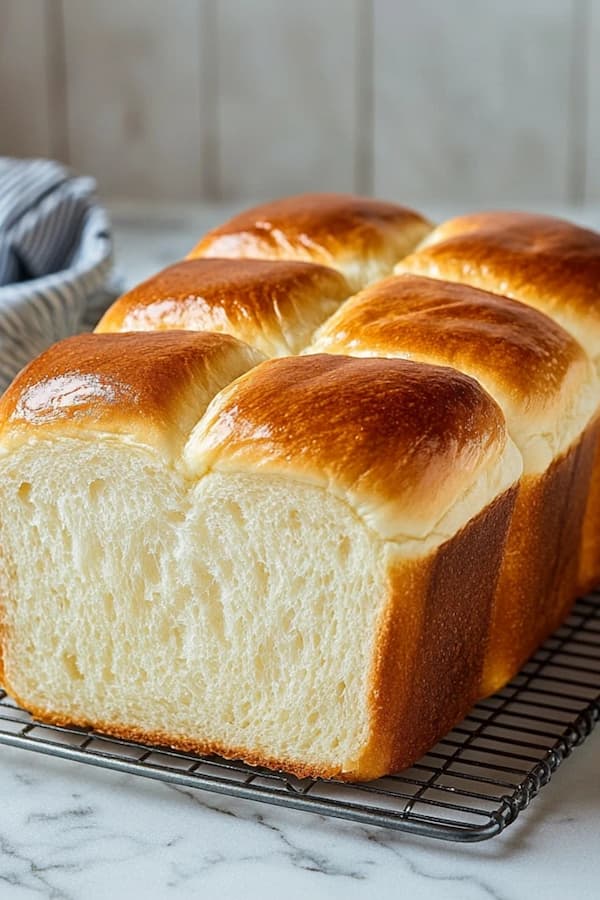
This version is made especially for beginners. The dough comes together smoothly, it’s easy to knead, and the result is a loaf so soft it practically pulls apart in ribbons.
Why You’ll Love It
If you’ve been nervous about baking bread, this recipe will change your mind. Milk bread is forgiving, even if you’re new to yeast doughs.
It’s slightly sweet, tender, and stays soft for days — perfect for toast, sandwiches, or just eating plain with a bit of butter. It’s also a great recipe to learn the rhythm of bread-making: mixing, resting, shaping, baking. Once you master this, you’ll feel confident making almost any bread.
And there’s something deeply satisfying about slicing into a loaf you made yourself. That golden top, the soft inside… it’s pure joy.
Ingredients (Makes 1 Loaf, Serves 8–10 Slices)
- 2 ½ cups all-purpose flour (plus extra for dusting)
- 2 tablespoons sugar
- 1 teaspoon salt
- 2 ¼ teaspoons (1 packet) instant yeast
- 1 cup warm milk (about 100°F)
- 2 tablespoons unsalted butter, softened
- 1 egg
Optional: a tablespoon of milk or melted butter for brushing the top before baking
Mix the Dough
In a large mixing bowl, whisk together the flour, sugar, salt, and instant yeast.
Make a small well in the center and pour in the warm milk, butter, and egg. Stir everything together with a wooden spoon until it starts to form a rough, sticky dough.
At this point, it won’t look perfect — that’s normal. The magic happens during kneading.
Knead Until Smooth
Transfer the dough to a lightly floured surface. Knead gently for about 8–10 minutes.
At first, it will feel sticky and a little messy, but keep going. You’ll notice it slowly becomes smooth and elastic. If it’s too sticky, sprinkle just a tiny bit of flour, but try not to add too much — milk bread loves moisture.
If you have a stand mixer with a dough hook, you can let it knead for about 6–7 minutes on medium speed.
The dough is ready when it’s soft, smooth, and slightly springy to the touch.
First Rise
Place the dough in a clean, lightly greased bowl. Cover it with a kitchen towel or plastic wrap and let it rest in a warm spot for about an hour, or until it doubles in size.
If your kitchen is cold, you can place the bowl inside the oven with just the light on — it creates the perfect gentle warmth for rising.
Watching the dough rise is one of those small, quiet joys of baking. It’s proof that time and patience really do work wonders.
Shape the Dough
Once the dough has doubled, punch it down gently to release air. Transfer it to your work surface and divide it into three equal pieces.
Roll each piece into a small oval, then fold the sides in like an envelope and roll it up tightly. Place the rolled pieces side by side in a greased 9×5-inch loaf pan.
This folding technique gives milk bread its signature pull-apart layers.
Second Rise
Cover the loaf pan with a towel and let it rise again for 30–40 minutes. It should puff up and almost reach the top of the pan.
While it rests, preheat your oven to 350°F (175°C).
Bake Until Golden
Brush the top with milk or melted butter for a glossy finish. Bake for about 25–30 minutes, or until the top is golden brown and the loaf sounds hollow when tapped.
Every oven behaves a bit differently, so keep an eye on it in the last few minutes. The goal is that perfect golden top with a soft, cloud-like center.
Cool and Slice
Once baked, remove the loaf from the pan and let it cool on a wire rack for at least 15 minutes before slicing.
It’s tempting to cut right in, but a short rest lets the crumb finish setting. When you finally slice it, you’ll see that soft, layered texture that makes milk bread so special.
Serve it warm with butter, honey, or jam. It’s also amazing as French toast or for sandwiches.
Tips for Perfect Milk Bread
- Use warm milk, not hot. Hot milk can kill the yeast.
- Be patient with rising. Letting the dough double in size gives the best texture.
- Don’t rush kneading. The smoother the dough, the softer the bread.
- Butter after baking. Brushing the loaf with melted butter while it’s warm keeps it moist.
- Store properly. Wrap it tightly once cool to keep that soft texture for days
Variations to Try
Once you’ve mastered the basic recipe, you can experiment a little:
- Sweet version: Add 2 extra tablespoons of sugar and a sprinkle of cinnamon.
- Savory twist: Mix in shredded cheese or herbs.
- Mini rolls: Divide the dough into 8 pieces and bake in a muffin tin.
- Japanese-style Hokkaido bread: Replace part of the milk with heavy cream for an even richer texture.
Each version keeps the same fluffy base but brings its own personality.
Why I Love This Recipe
Every baker has that one recipe that feels like a small victory. For me, this is it. Milk bread feels like something special but is surprisingly simple once you try it.
It’s the kind of bread that looks impressive sitting on the counter, yet it’s soft enough to tear with your hands. I love watching friends or family take the first bite — there’s always that pause, followed by a smile.
It reminds me that baking doesn’t have to be complicated to be rewarding. Sometimes, a few ingredients, a bit of patience, and a warm oven are all you need.
Storing and Reheating
Keep your milk bread wrapped tightly in plastic or a clean towel at room temperature. It stays soft for 3–4 days.
To reheat, warm a slice in the microwave for 10–15 seconds or toast it lightly. You can also freeze the loaf once cooled — slice it first for easy thawing later.
Final Thoughts
Milk bread is one of those recipes that makes you fall in love with baking all over again. It’s simple, approachable, and turns out so soft it almost doesn’t feel real.
For beginners, it’s the perfect first loaf. For seasoned bakers, it’s a reminder that even simple recipes can feel magical.
Once you make it, you’ll find excuses to bake it again — breakfast, sandwiches, or just a quiet afternoon project that fills your kitchen with warmth.
Can I Use Active Dry Yeast Instead of Instant?
Yes! Just dissolve the yeast in the warm milk along with a pinch of sugar and let it sit for about 10 minutes until it looks foamy. Then continue with the recipe as written.
Can I Make Milk Bread Without Eggs?
You can. Replace the egg with 2 tablespoons of milk or a tablespoon of yogurt. The texture will still be soft and fluffy — maybe a bit less rich, but delicious nonetheless.
.