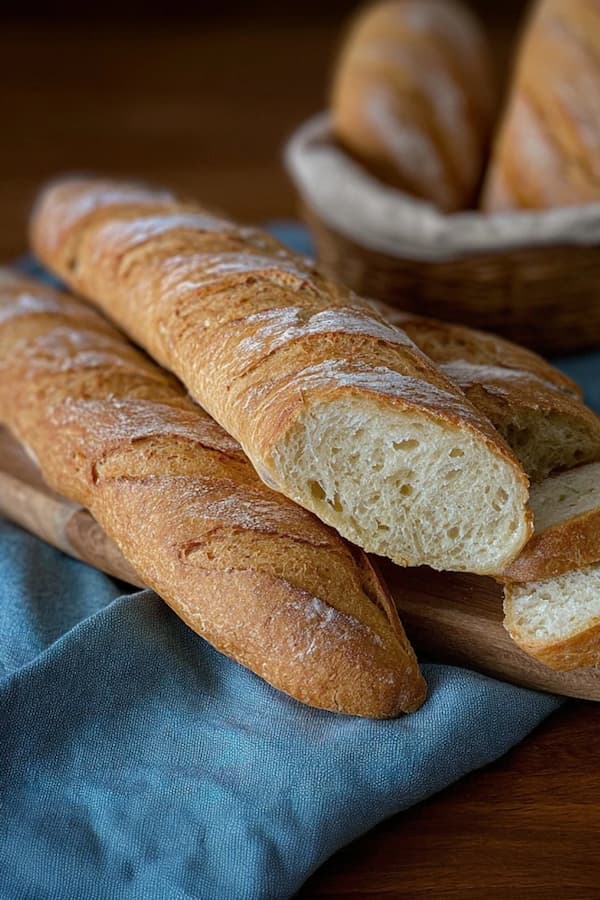
Golden crust, soft center, and the smell that fills the whole kitchen.
For me, a baguette isn’t just a loaf — it’s a little ritual. It reminds me of mornings when the house was quiet, the sun barely up, and the only sound was the kettle heating on the stove.
I started making baguettes at home because I wanted that bakery-style crackle without leaving the house.
The dough is simple. The process feels slow and grounding. The results are worth every minute.
What Makes a Good Baguette
A baguette has character. A crisp crust that cracks under your fingers. A soft, airy middle. A deep, slightly nutty flavor that comes from slow fermentation instead of shortcuts.
When you give the dough time to rest, it rewards you with texture that store-bought loaves can’t match.
I’ve tried quicker versions in the past. They tasted fine, but they didn’t have soul. I eventually learned that the rest periods aren’t just waiting — they’re doing the work for you. The gluten strengthens. The flavor develops. The loaf becomes something you actually look forward to slicing into.
My First Attempts
The truth? My first baguette looked more like a lopsided breadstick. I rushed through shaping, didn’t flour my hands enough, and the dough stuck to everything, including my patience.
But each try taught me something small: let the dough relax before shaping, don’t handle it aggressively, and let the oven preheat longer than you think.
There was a morning when I finally pulled out a loaf that looked surprisingly close to what you’d find in a bakery — golden, blistered, and singing (yes, the crust actually makes tiny crackling sounds when it cools). From that day on, I was hooked.
Ingredients
Makes 3 Medium Baguettes
- 3 ½ cups all-purpose flour
- 1 ½ teaspoons salt
- 1 teaspoon sugar
- 1 teaspoon instant yeast
- 1 ¼ cups warm water (plus 1–2 tablespoons more if the dough feels dry)
Mix the Dough
Add the flour, salt, sugar, and yeast to a large bowl. Give it a quick stir. Pour in the warm water and use your hands or a wooden spoon to bring everything together. The dough will look shaggy at first — almost messy — but that’s exactly how it should look.
I like to switch to using my hands early just to feel the dough. Once it starts to come together, it gets softer and easier to manage.
Knead Until Smooth
Turn the dough out onto a lightly floured surface. Knead gently for about 8–10 minutes. You don’t need aggressive movements. Just fold, press, turn. Repeat. You’ll notice the dough becoming smoother and more elastic.
If it sticks to your hands a little, don’t panic. Resist the urge to keep adding more flour. A slightly sticky dough gives a better crumb later.
Let It Rise
Place the dough in a clean bowl and cover it with a towel. Let it rise in a warm spot for 1–1½ hours or until it doubles in size.
This step always feels like magic. You leave it alone, and it transforms on its own.
Divide and Rest
Once the dough has risen, gently deflate it. Try not to punch it aggressively — just press it down with your palms. Divide the dough into three pieces. Let them rest on the counter for around 10 minutes. This short break relaxes the gluten, which makes shaping much easier.
Shape the Baguettes
Take one piece of dough and pat it into a rough rectangle. Roll it into a long cylinder, around 12–14 inches long. Tuck the seams underneath and lightly pinch the ends so they taper.
This step can feel awkward at first, but the dough becomes easier to handle as you practice.
Second Rise
Place the shaped baguettes on parchment paper or a lightly floured cloth. Cover them loosely and let them rise again for 30–40 minutes. They should look slightly puffier but not overly swollen.
The dough at this stage feels delicate, so avoid moving it too much.
Score the Tops
Preheat your oven to 240°C (465°F). Make sure it heats thoroughly. A hot oven is essential for that crisp outer crust.
Just before baking, take a sharp knife or razor blade and make three or four diagonal slashes across each baguette. This helps the loaf expand without tearing in odd places.
Bake Until Golden
Bake the baguettes for 20–25 minutes or until deep golden brown. For a crispier crust, place a small baking dish of hot water on the lowest oven rack. The steam helps create that classic crackle.
When the baguettes come out, let them cool for at least 10–15 minutes. They’ll make a faint crackling sound as they cool — a small detail that never gets old.
What Makes This Recipe Reliable
You don’t need special flour. You don’t need fancy equipment. The technique is simple enough for beginners but still produces a baguette that looks and tastes artisanal.
The long rise gives flavor. The hot oven gives color. The steam gives crunch. Everything works together.
Small Tweaks to Try
Add Flavor
You can stir in a handful of shredded cheese, roasted garlic, or herbs to make flavored baguettes. The base dough stays the same.
Try Overnight Fermentation
Mix the dough at night and let it rise slowly in the fridge. This gives an even deeper flavor and a softer texture.
Make Mini Baguettes
Just divide the dough into six pieces instead of three. They bake faster and work great for sandwiches.
Serving Ideas
Fresh baguettes go with just about anything. A warm slice with butter and jam. A bowl of soup. A simple tomato bruschetta. Even plain olive oil tastes better with a freshly baked baguette.
If you like sandwiches, this recipe gives a soft interior that holds fillings well without falling apart.
Can I Freeze Baguette Dough?
Yes. After shaping the baguettes, place them on a baking sheet and freeze until firm. Then wrap each one tightly and freeze for up to two months. When you’re ready to bake, let the dough thaw and rise again before placing it in the oven.
Why Is My Crust Not Crispy Enough?
If your baguette comes out soft, the oven might not be hot enough, or there wasn’t enough steam. Preheating longer and adding a small pan of hot water usually solves this. Another trick is to mist the baguettes lightly with water right before baking.
Final Thoughts
Baking a baguette at home feels like a small accomplishment every time. It’s simple, but it rewards you with real, satisfying results — crisp crust, soft crumb, and that comforting smell drifting through the kitchen.
Once you make it a few times, it becomes a recipe you rely on, especially on slow mornings or cozy afternoons.
I discovered this baguette recipe at mushroomsalus website.