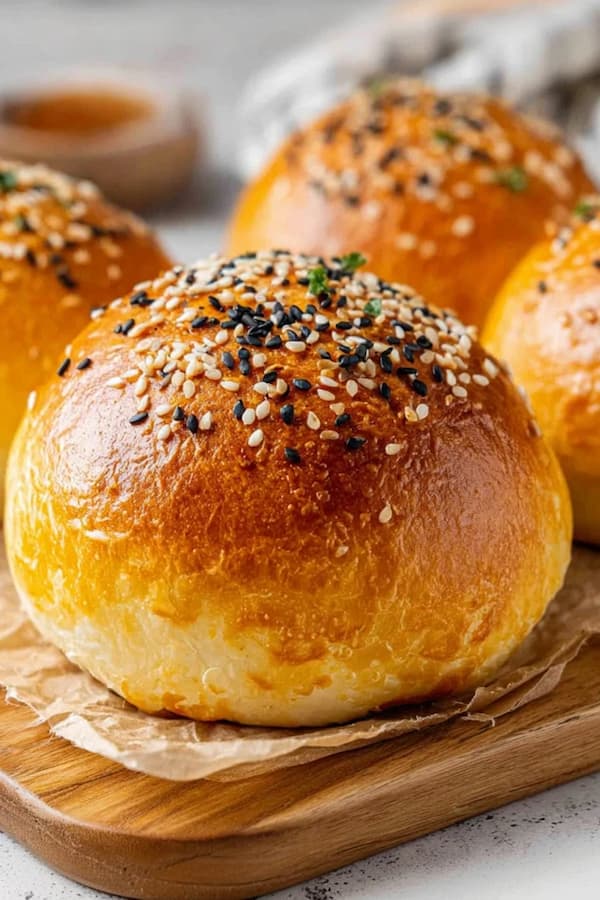
Soft, buttery, and golden, brioche buns feel like a small luxury you can make at home. They turn simple meals into something memorable. And even though they look fancy, the process feels peaceful once you get into it.
Over the years, I’ve refined the recipe until it consistently gives me soft buns with that signature buttery flavor. They’re perfect for burgers, breakfast sandwiches, sliders, or just eating with a bit of butter and jam.
Once you try homemade brioche, it’s almost impossible to go back.
Why Brioche Feels So Special
Brioche walks a fine line between bread and pastry. It’s richer than most breads because of the eggs and butter, but it still has that light, airy center that comes from a slow rise. The dough starts sticky and a little unruly but transforms into a silky, smooth ball that feels almost alive under your hands.
The flavor is gently sweet — not like dessert, just enough to make the bread taste warm and complex. When the buns bake, the smell fills the kitchen with this cozy, buttery scent that’s hard to forget.
What I love most is how they elevate even the simplest meal. Serve a homemade brioche bun with a veggie burger, scrambled eggs, or roasted mushrooms, and suddenly it becomes something you want to savor slowly.
My First Brioche Attempt
My first attempt at brioche was far from perfect. I added the butter too quickly and my dough turned greasy instead of smooth. It still baked, but the texture wasn’t quite right. That mistake taught me an important lesson: brioche rewards patience.
The second try went much better. I added the butter slowly — really slowly — and let the dough knead until it became glossy. That was the moment I understood brioche. It needs time, warmth, and gentle handling, not force.
Today, I enjoy the process as much as the result. Kneading brioche dough feels calming, like watching something evolve under your hands. And when the buns come out of the oven, golden and puffy, you know the wait was worth it.
Ingredients (Makes 8 Large Brioche Buns)
Dough
- 3 cups all-purpose flour
- 2 ¼ teaspoons active dry yeast (one packet)
- ¼ cup granulated sugar
- 1 teaspoon salt
- 3 large eggs (room temperature)
- ½ cup warm milk
- ½ cup unsalted butter, softened
- 1 teaspoon vanilla extract (optional)
- 1 egg
- 1 tablespoon milk
Activate the Yeast
Warm the milk slightly — just warm to the touch, not hot. Stir in the yeast and a pinch of sugar. Let it sit for about 5–10 minutes until foamy.
This step wakes up the yeast and kickstarts the rise.
Mix the Base Dough
In a large bowl, combine the flour, sugar, and salt. Make a small well in the center and pour in the yeast mixture, eggs, and vanilla. Begin mixing gently until the dough starts to come together.
At this point, the dough should look shaggy and imperfect.
Add the Butter Slowly
This is the most important step. Add the softened butter one tablespoon at a time, mixing well after each addition. The dough will look messy at first — almost too soft — but it changes quickly.
Keep kneading for about 8–10 minutes (or 5 minutes in a mixer). The dough should become smooth, stretchy, and slightly sticky. When it pulls away from the bowl in one piece, it’s ready to rise.
First Rise
Place the dough in a lightly oiled bowl and cover it. Let it rise in a warm spot for about 1–1½ hours or until doubled in size.
This is when the dough becomes puffy and soft.
Chill the Dough
Place the risen dough in the fridge for at least 1 hour. Chilled dough is easier to shape and gives the buns a neater look.
Shape the Buns
Divide the dough into 8 equal pieces. Roll each piece into a smooth ball by tucking the edges underneath and rotating lightly with your hand.
Place them on a lined baking sheet, spaced apart so they have room to expand.
Second Rise
Cover the buns loosely and let them rise for another 45–60 minutes. They should look fuller and lighter.
The dough will feel airy when you gently touch the tops.
Add the Egg Wash
Whisk the egg and milk together. Brush the tops of the buns gently. This step gives them that glossy, golden finish bakery brioche is known for.
Bake
Bake at 190°C / 375°F for 14–17 minutes, or until the buns are golden brown on top. Let them cool slightly before slicing.
Warm brioche is unbelievably soft — you’ll want to tear one open right away.
What Makes These Buns So Soft
Three simple things:
The butter – Adds richness and tenderness.
The eggs – Give color, structure, and softness.
Slow rising – Allows the gluten to relax and the flavor to deepen.
This combination creates buns that feel delicate but sturdy enough to hold fillings.
Variations to Try
Sweet Brioche Buns – Add chocolate chips or cinnamon sugar.
Savory Brioche – Mix in herbs or grated parmesan.
Mini Slider Buns – Divide the dough into 12 or 14 smaller portions.
Brioche Cinnamon Rolls – Use the dough as a base for rolls — it’s perfect for it.
How to Serve Brioche Buns
These pair well with almost anything:
- Veggie burgers
- Mushroom patties
- Breakfast sandwiches
- Pulled BBQ mushrooms
- Fried eggs
- Tomato and mozzarella
Or keep it simple with butter and jam. Brioche doesn’t need much to shine.
Storing Your Brioche
Store the buns in an airtight container for up to 3 days. Warm them in the oven for a few minutes before serving to restore softness. They also freeze beautifully for up to 2 months.
Can I Make the Dough Ahead of Time?
Yes. Prepare the dough, let it rise once, then refrigerate it overnight. Shape and bake the next day. This actually improves the flavor.
Why Is My Brioche Dough Sticky?
Brioche dough is naturally soft and slightly sticky. If it’s extremely sticky, it may need a minute or two longer of kneading. Avoid adding extra flour unless absolutely necessary — brioche should stay soft.
Final Thoughts
Brioche buns feel luxurious, but they’re surprisingly approachable once you understand the rhythm. They rise beautifully, taste rich without being heavy, and turn everyday meals into something special.
Once you master them, you’ll start finding excuses to bake a batch — and nobody in your kitchen will complain.