Fried catfish is more than just a meal; it is a weekend tradition that brings people together around a big, noisy table. Growing up, the sound of fish hitting hot oil was the signal that the work week was finally over and the relaxing had begun.
This recipe focuses on a crunchy cornmeal crust and a moist center that makes every bite worth the effort.
Ingredients
This recipe serves 4 people, assuming everyone is hungry for a classic fish fry experience.
- 4 large catfish fillets (about 1.5 to 2 pounds total)
- 1.5 cups yellow cornmeal
- 1/2 cup all-purpose flour
- 1 cup buttermilk
- 1 tablespoon hot sauce (like Tabasco or Crystal)
- 1 teaspoon garlic powder
- 1 teaspoon onion powder
- 1 teaspoon smoked paprika
- 1/2 teaspoon cayenne pepper (optional for heat)
- 2 teaspoons salt
- 1 teaspoon black pepper
- Peanut oil or vegetable oil for frying
- Lemon wedges for serving
Real Flavor
In the world of Southern cooking, catfish is king because it is a clean, mild fish that takes on the flavor of the spices around it. Some people worry that catfish can taste “muddy,” but the secret to fixing that is all in the prep work. When you do it right, the fish is flaky and light, hidden inside a shell that shatters when you bite into it.
The best fried fish does not come from a bag of pre-mixed batter. It comes from a simple blend of cornmeal and flour. The cornmeal provides that iconic grit and crunch, while the flour helps the coating stick to the meat so it does not peel off in the pan. It is a humble dish that relies on good technique rather than expensive ingredients.
The Soak
Before you even touch the dry ingredients, put your fillets in a shallow dish. Pour the buttermilk and the hot sauce over the fish. Flip the fillets so they are completely covered. Let them sit in the fridge for at least 10 minutes.
The acid in the buttermilk helps to neutralize any strong fishy flavors and softens the texture of the meat. It also creates a sticky surface for the breading to cling to later.
Dry Blend
In a wide bowl or a heavy-duty plastic bag, mix the cornmeal, flour, and all of your spices. Use a fork to stir the salt, pepper, garlic powder, onion powder, and paprika together. You want the color of the mix to be a pale orange from the paprika.
This ensures that every inch of the fish will be seasoned evenly. If you like a bit of a kick, adding more cayenne pepper now is the time to do it.
Heat Check
Pour your oil into a deep cast-iron skillet or a heavy pot. You need enough oil so the fish can float without touching the bottom. Heat the oil over medium-high heat until it reaches 350°F. If you do not have a thermometer, drop a tiny pinch of cornmeal into the oil.
If it sizzles and dances immediately, the oil is ready. If it smokes, it is too hot; if it sinks, it needs more time.
Breading Station
Take one fillet out of the buttermilk and let the extra liquid drip off. Put it into the cornmeal mix. Press down firmly so the breading sticks. Flip it over and do the same on the other side. Shake off the excess cornmeal. You want a thin, even coat.
If the breading is too thick, it will become soggy in the middle. Lay the breaded fish on a wire rack for a couple of minutes before frying. This “sets” the crust so it stays on the fish during the cook.
The Fry
Slowly lower two fillets into the hot oil. Do not crowd the pan. If you put too much cold fish in at once, the oil temperature will drop, and the fish will soak up the grease instead of getting crispy. Fry for about 4 to 5 minutes on each side.
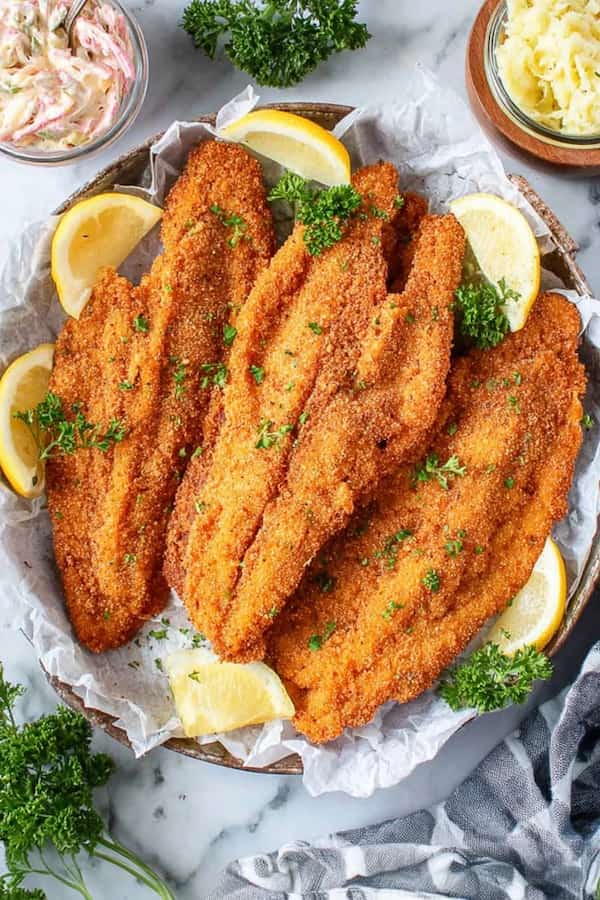
The fish is done when the crust is a deep golden brown and the meat feels firm when you poke it. The internal temperature should be around 145°F.
Drain Well
Use a slotted metal spatula to lift the fish out of the oil. Do not put the hot fish directly onto a flat plate or paper towels. Instead, place it on a clean wire rack over a baking sheet.
This allows air to circulate around the fish so the bottom stays as crispy as the top. Sprinkle a tiny bit of extra salt over the fish while it is still hot and glistening.
Better Crunch
If you want the absolute best texture, use yellow cornmeal instead of white. Yellow cornmeal is usually a bit coarser and holds its crunch longer after the fish comes out of the oil. Also, keep an eye on your oil.
If you are frying a large batch, bits of cornmeal will fall off and burn at the bottom of the pan. Between batches, use a fine skimmer to remove those burnt bits so they don’t stick to the next pieces of fish.
Another “top-notch” tip is to make sure your fish is dry before it goes into the buttermilk. If the fillets are sitting in a pool of water from the package, the buttermilk will be diluted and won’t stick well.
Pat them dry with a paper towel first, then start the soaking process. Small details like this are what separate a good fish fry from a great one.
Common Pitfalls
The most common mistake is frying the fish at too low of a temperature. If the oil is not hot enough, the cornmeal acts like a sponge for the fat. You will end up with a greasy, heavy meal that feels like a brick in your stomach. Always wait for the oil to come back up to 350°F between batches.
Another issue is overcooking. Catfish is lean, and it can dry out very quickly. Once the bubbling in the oil slows down significantly, it usually means the moisture has left the fish and it is done. Remove it promptly. The fish will continue to cook for a minute or two after it leaves the pan due to residual heat.
Why Is My Catfish Breading Falling Off In The Pan?
If your breading peels away like a shell, it usually means the fish was too wet or you moved it too much while it was frying. The buttermilk soak is meant to act as a glue, but if there is too much liquid, the breading becomes a paste that slides off. Make sure to shake off the excess buttermilk before coating.
Also, once you put the fish in the oil, leave it alone for the first two minutes. The crust needs that time to harden and bond to the meat. If you flip it too early, you break that bond.
How Do I Get Rid Of The “Muddy” Taste In Catfish?
That earthy flavor some people dislike comes from a compound found in certain fresh-water environments. The best way to remove it is the buttermilk soak mentioned in the recipe. The lactic acid in the milk breaks down those compounds. If you don’t have buttermilk, you can soak the fillets in plain milk or even cold salt water for an hour.
Another trick is to trim away any dark fat or reddish meat along the sides of the fillet before cooking, as that is where the strongest flavors are stored.
A Must Try Fish Recipe!
Southern fried catfish is a meal that celebrates simplicity. It doesn’t need fancy sauces or complicated plating. A side of hushpuppies, some coleslaw, and a few lemon wedges are all you need to make it a feast. It is a recipe that relies on the heat of the oil and the timing of the cook.
When you get that perfect, golden-brown crust and the steam rises from the white, flaky meat, you will understand why this dish is such a favorite. It is comfort food at its best. It takes a little bit of practice to get the oil temperature just right, but once you do, you will be the star of every summer cookout.
Meta Description
Master the art of the Southern fish fry with this classic fried catfish recipe. Learn the buttermilk soak secret and the perfect cornmeal ratio for a crunchy, golden crust.