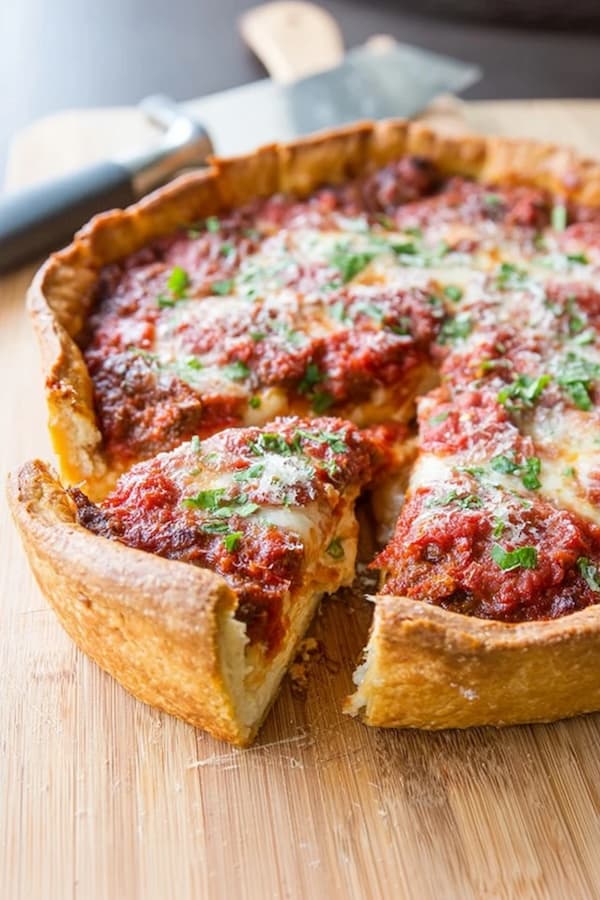
Chicago deep dish pizza is a massive, buttery masterpiece that feels more like a savory pie than a standard flatbread. This recipe focuses on creating that iconic biscuit-like crust and the distinct “upside-down” layering that keeps the cheese from burning during the long bake.
It is a hearty, impressive meal that brings the spirit of a Windy City pizzeria right into your own kitchen.
Ingredients
This recipe makes 2 deep-dish pizzas, serving about 6 to 8 people total, as one slice is usually enough for a full meal.
- 4 cups all-purpose flour
- 3 tablespoons yellow cornmeal
- 1.5 teaspoons salt
- 2 teaspoons granulated sugar
- 2.25 teaspoons active dry yeast
- 1.25 cups lukewarm water
- 1/2 cup (1 stick) unsalted butter, melted
- 1/4 cup vegetable oil
- 1 pound sliced provolone or mozzarella cheese
- 1 pound Italian sausage (removed from casings)
- 28 ounces crushed tomatoes (drained of excess liquid)
- 2 cloves garlic, minced
- 1/4 cup grated Parmesan cheese
The Base
A top-notch Chicago crust is different from a New York style because it needs to be buttery and somewhat flaky rather than chewy. The addition of cornmeal gives it that signature yellow tint and a slight crunch that stands up to the heavy toppings.
Unlike regular pizza dough, we use a fair amount of butter and oil to create a rich, short-crust texture. This is what allows the dough to hold up the weight of a two-inch layer of cheese and sauce without getting soggy.
The key is to avoid over-kneading. If you work the dough too long, you develop too much gluten, and the crust will become tough like a bagel.
You want it just smooth enough to hold together. When it bakes, the butter in the dough essentially fries the outside of the crust against the pan, giving you that golden, decadent finish that defines a true deep dish.
Yeast Bloom
Mix the warm water, sugar, and yeast in a small bowl. Let it sit for about five minutes until a thick foam appears on the surface.
While that wakes up, stir your flour, cornmeal, and salt together in a large mixing bowl. Add the melted butter and vegetable oil to the yeast mixture once it is ready.
Dough Mix
Pour the wet ingredients into the flour. Use a wooden spoon to stir until a soft, sticky dough forms. Turn it out onto a floured surface and knead it for only three or four minutes. You are looking for a dough that is soft and slightly oily to the touch.
Place it in a greased bowl, cover it, and let it rise in a warm spot for about an hour or until it doubles in size.
Pan Prep
While the dough rises, prepare your pans. Traditional deep dish uses a round cake pan or a specialized deep-dish pizza pan with two-inch sides.
Coat the bottom and sides generously with vegetable oil or butter. This is vital for both the flavor and for ensuring the pizza doesn’t stick when you try to lift out a heavy slice later.
Layer Flip
This is the most important part: the order of ingredients. In Chicago, we put the cheese on the bottom. Lay down a thick layer of sliced provolone or mozzarella directly onto the dough. This protects the crust from the moisture of the sauce.
Next, add your raw Italian sausage in small, flattened chunks or a solid layer. Because the pizza bakes for a long time, the meat will cook perfectly inside the pie.
Sauce Top
Cover the meat and cheese with your crushed tomatoes. You want to make sure you drain your canned tomatoes in a sieve for a few minutes before adding them; otherwise, the pizza will be too watery.
Mix the minced garlic into the tomatoes and spread them evenly over the top. The sauce acts as a lid, keeping the cheese and meat from drying out or burning in the high heat.
Slow Bake
Preheat your oven to 425°F. Place the pizzas on the lower rack and bake for 25 to 30 minutes. You want to see the edges of the crust turn a deep golden brown. If the top of the sauce looks dry, you can brush a little olive oil over it.
Let the pizza rest in the pan for at least ten minutes before cutting. This allows the cheese to set so it doesn’t immediately slide out of the crust.
Better Crunch
To get a “top-notch” crust, try the “lamination” trick. After the dough has risen once, roll it out into a large rectangle, spread some softened butter over it, and fold it into thirds like a letter. Roll it out again and repeat.
This creates thin layers of butter inside the dough, much like a croissant. When it bakes, these layers puff up and create an incredibly flaky, crispy texture that is much better than a standard flat dough.
Another tip is to use sliced cheese instead of shredded. Shredded cheese has starch on it to keep it from clumping in the bag, which can prevent it from melting into that beautiful, stretchy “cheese pull” that Chicago pizza is known for. High-quality deli slices of provolone provide a sharp flavor and a perfect melt that holds the whole pizza together.
Common Pitfalls
The biggest mistake is using a sauce that is too thin. If you use a standard jarred marinara, it will likely be too watery for a deep dish. You need thick, crushed tomatoes or even tomato strips. If your sauce is watery, the steam will get trapped under the tomatoes and turn your crust into a soggy mess. Always drain your tomatoes well.
Another issue is not letting the pizza rest. I know it smells amazing, but if you cut it the second it comes out of the oven, the molten cheese will flood the pan and the crust will lose its structure. Giving it ten to fifteen minutes to sit is the difference between a perfect slice and a pile of toppings.
Why Is The Sauce On Top Of The Pizza?
The reason the sauce goes on top of a Chicago deep dish is purely practical. Because these pizzas are very thick, they require a much longer baking time than a thin-crust pizza—usually thirty minutes or more. if the cheese were on top, it would burn to a crisp long before the dough and the meat were cooked through.
By putting the sauce on top, the moisture in the tomatoes keeps the cheese and meat at a safe temperature while they cook, ensuring everything finishes at the same time.
Can I Use A Regular Cake Pan For This?
Yes, a standard 9-inch round cake pan works perfectly for this recipe. Just make sure the pan is at least two inches deep so you have enough room to build up the sides of the crust. If you don’t have a cake pan, a large cast-iron skillet is another excellent option.
Cast iron holds heat very well and will give you a very crispy, fried texture on the bottom of your crust. Just be sure to grease whatever pan you use very well so the butter in the dough doesn’t cause it to stick.
Final Thoughts
Making Chicago deep dish at home is a fun project that yields a truly massive meal. It is a slow process, but the results are far more satisfying than any frozen or takeout version. By focusing on the buttery crust and the correct layering of ingredients, you can bring a piece of Chicago history to your dinner table.
Keep your tomatoes dry, your cheese sliced, and your resting time long. These small steps ensure a top-notch pizza every single time you bake. It is the ultimate cold-weather comfort food.