Chicken alfredo is the gold standard of Italian-American comfort food, offering a rich and creamy experience that feels like a warm hug in a bowl. This recipe focuses on getting that perfectly seared, golden-brown chicken to rest atop a bed of silky noodles drenched in a sauce made from real butter and cream.
It is a reliable showstopper that you can pull together in about thirty minutes for a restaurant-quality meal at home.
Ingredients
This recipe makes 4 generous servings, which is perfect for a family dinner or a couple of nights of incredible leftovers.
- 2 large boneless skinless chicken breasts
- 1 pound fettuccine pasta
- 2 cups heavy cream
- 1/2 cup unsalted butter (one stick)
- 1.5 cups freshly grated Parmesan cheese
- 3 cloves garlic, minced
- 1 teaspoon salt
- 1/2 teaspoon black pepper
- 1/2 teaspoon onion powder
- 1/2 teaspoon paprika (for the chicken color)
- 1 tablespoon olive oil
- Fresh parsley for garnish
The Bird
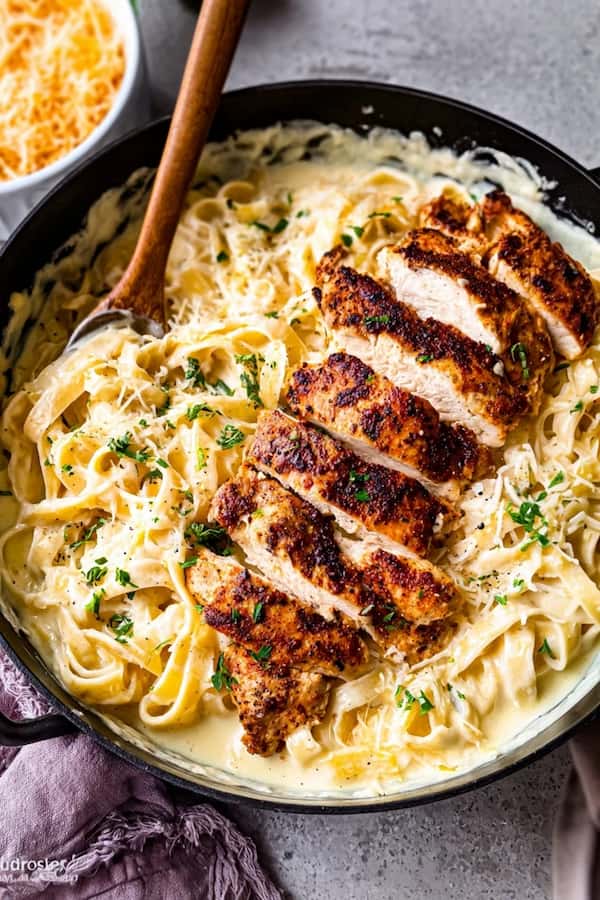
The secret to a top-notch chicken alfredo is how you handle the meat. Most people just boil or poach their chicken, but you want to achieve a deep, savory crust like the one seen in the provided image. Start by slicing your chicken breasts in half lengthwise to create thinner cutlets. This ensures the chicken cooks through quickly without becoming dry or rubbery.
Season the chicken heavily with salt, pepper, onion powder, and paprika. The paprika is not just for flavor; it helps the chicken develop that beautiful reddish-golden hue as it hits the hot oil. When you sear the chicken, leave it alone for at least four minutes on the first side. This allows a proper crust to form, which traps the juices inside and provides a great texture contrast to the soft noodles and creamy sauce.
Pasta Boil
Start by bringing a large pot of water to a rolling boil. Add a handful of salt—it should taste like the sea. Drop in your fettuccine and cook it until it is just “al dente.”
You want the noodle to have a slight bite because it will finish cooking for a minute or two inside the hot sauce later. Drain the pasta but do not rinse it; the natural starch on the surface of the noodles helps the alfredo sauce cling to them.
Chicken Sear
While the pasta water is heating up, heat the olive oil in a large skillet over medium-high heat. Place your seasoned chicken cutlets in the pan. Cook them for about 5 to 6 minutes per side until they reach an internal temperature of 165 degrees.
Once finished, move the chicken to a cutting board and let it rest for at least five minutes. Resting allows the juices to redistribute so they don’t leak out when you slice the meat.
Butter Melt
In the same skillet you used for the chicken, turn the heat down to medium and add the stick of butter. As it melts, scrape the bottom of the pan with a wooden spoon to loosen the “fond”—those little brown bits of chicken seasoning left behind.
These bits are flavor gold and will give your white sauce a deeper, more complex taste. Add the minced garlic and cook for just one minute until it smells wonderful.
Cream Simmer
Pour the heavy cream into the skillet with the garlic butter. Bring the mixture to a very gentle simmer. You do not want a hard boil here, as high heat can cause the cream to separate or scorch. Let it bubble softly for about 3 to 5 minutes.
You will notice the cream starting to thicken slightly as the water evaporates, creating a rich base for the cheese.
Cheese Bond
Turn the heat to low and whisk in the freshly grated Parmesan cheese one handful at a time. It is vital to use cheese you grated yourself from a block. Pre-shredded cheese is coated in potato starch to prevent clumping in the bag, but that starch will make your alfredo sauce gritty or lumpy.
Real Parmesan will melt instantly into the cream, creating a glossy, mirror-like sauce.
Final Toss
Add the cooked fettuccine directly into the skillet with the sauce. Use tongs to toss the noodles thoroughly until every strand is coated in the white gold. If the sauce feels too thick, you can add a splash of reserved pasta water to loosen it.
Slice your rested chicken into strips and lay them across the top of the pasta. Garnish with a sprinkle of fresh parsley and extra black pepper before serving immediately.
Better Emulsion
To get a “top-notch” sauce that stays creamy even as it cools, you need a perfect emulsion. This is the chemical bond between the fats in the butter and cream and the solids in the cheese. If you add the cheese while the cream is boiling, the heat will break that bond, and you will end up with a puddle of yellow oil. Always lower your heat before the cheese hits the pan.
Another trick is the “rest.” Once the pasta is tossed in the sauce, let it sit for sixty seconds before plating. This allows the noodles to absorb just a tiny bit of the cream, which anchors the sauce to the pasta. It makes the difference between a dish where the sauce sits at the bottom of the bowl and a dish where every bite is perfectly balanced.
Common Pitfalls
The biggest mistake in home alfredo is using half-and-half or milk instead of heavy cream. While it might save a few calories, milk does not have the fat content required to stand up to the acidity of the garlic and the salt of the cheese. It will often result in a thin, watery sauce that breaks easily. If you want that thick, restaurant-style coating seen in the image, stick to heavy whipping cream.
Another issue is overcooking the garlic. Garlic turns bitter very quickly if it browns. You only want to sauté it until it is fragrant and soft. If your garlic looks brown or dark, it is best to wipe the pan and start over, as that bitterness will permeate the entire cream sauce and ruin the delicate flavor of the Parmesan.
Why Is My Alfredo Sauce Clumpy?
Clumping usually happens for two reasons: the heat was too high or you used pre-shredded cheese. When cheese is added to a boiling liquid, the proteins tighten up and form rubbery clumps. Always whisk the cheese in over low heat.
Additionally, the anti-caking agents in bagged cheese prevent it from becoming a smooth liquid. By grating a block of high-quality Parmesan, you ensure a silky texture every time.
How Can I Reheat Leftover Alfredo?
Alfredo is notorious for separating when put in the microwave. To fix this, place your leftovers in a small pan on the stove over very low heat. Add a tablespoon of water or a splash of milk. As the pasta warms up, stir it constantly.
The added moisture and the slow heat will help “re-emulsify” the sauce, bringing back that creamy texture without turning it into an oily mess.