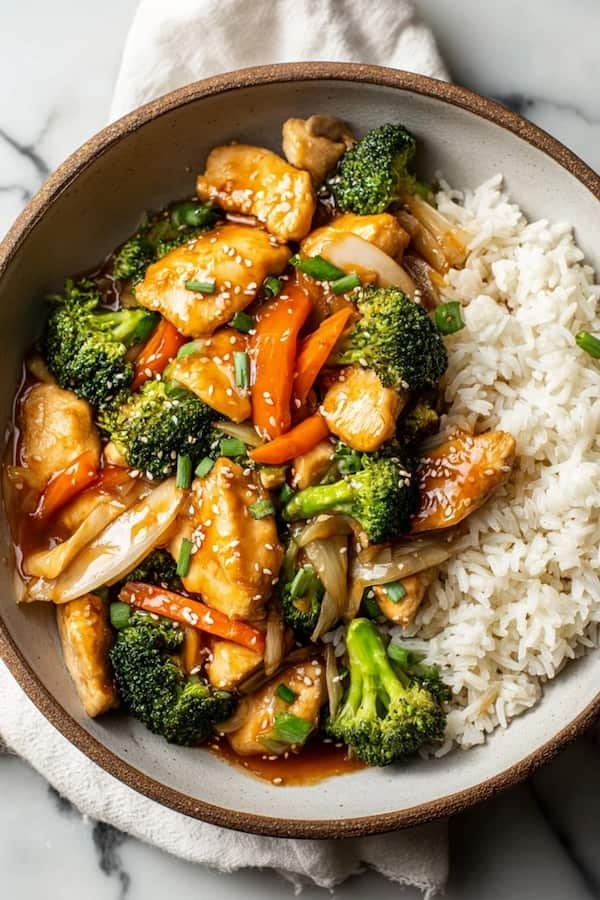
Cooking at home should not feel like a chore, and a solid stir fry is the best way to prove that. This chicken dish is all about high heat and fast moves, resulting in a plate full of color and crunch. It is the kind of meal that works for a busy Tuesday but tastes good enough to serve to guests.
Ingredients
This recipe is built to serve 4 people comfortably, especially when you serve it alongside a big bowl of rice.
- 1.5 pounds chicken breast or thighs, cut into thin strips
- 2 cups broccoli florets, chopped small
- 1 red bell pepper, sliced into thin strips
- 2 medium carrots, peeled and sliced into rounds
- 1 snap pea bag (about 1 cup), ends trimmed
- 3 cloves garlic, crushed and minced
- 1 tablespoon fresh ginger, grated fine
- 1/4 cup soy sauce
- 2 tablespoons honey or brown sugar
- 1 tablespoon rice vinegar
- 1 tablespoon cornstarch
- 3 tablespoons vegetable oil (or any high-heat oil)
- 1 teaspoon toasted sesame oil
Proper Planning
The biggest rule of stir-frying is that you cannot stop once you start. Because the heat is so high, things move in seconds, not minutes. If you are halfway through cooking the meat and realize you forgot to chop the carrots, your chicken will be dry by the time you are ready. I suggest doing all your chopping first. Put each vegetable in its own small pile on a large cutting board.
Another trick for success is the size of your cuts. You want the chicken and the vegetables to be roughly the same thickness. If the carrots are thick and the peppers are thin, the peppers will turn to mush while the carrots are still hard. Aim for “bite-sized” across the board. This ensures that every forkful has a bit of everything and that the cook time stays consistent.
Meat Prep
Before the chicken touches the pan, toss it in a bowl with a tiny splash of soy sauce and half of your cornstarch. This is a light version of “velveting.” It gives the chicken a thin coating that protects it from the intense heat of the pan.
It keeps the white meat from getting that stringy, dry texture that often happens in stir-fry dishes. Let it sit for about five minutes while you get the pan hot.
Sauce Base
In a small glass or jar, whisk your soy sauce, honey, rice vinegar, sesame oil, and the rest of the cornstarch.
Give it a good stir until the honey is fully mixed in and the cornstarch is dissolved. You will need to stir this again right before you pour it into the pan, as cornstarch likes to sink to the bottom and stay there.
Searing Phase
Get your wok or your largest skillet on the stove over high heat. Add one tablespoon of oil. Once you see a tiny bit of smoke, add the chicken. Spread it out so it covers the bottom of the pan. Let it sit for one minute without touching it so it gets a nice brown crust.
Stir it for another two minutes until it is mostly cooked through, then move it to a clean plate. Do not worry if it is slightly pink in the middle; it will finish cooking in the final step.
Vegetable Flash
Wipe the pan out if there are burnt bits, add another tablespoon of oil, and toss in the carrots and broccoli. These take the longest to cook, so they go first. Stir them for two minutes. Next, add the bell peppers and snap peas.
You are looking for the vegetables to turn bright and vibrant. They should be hot all the way through but still have a snap when you bite them.
Spice Hit
Push the vegetables to the sides of the pan to create a hole in the middle. Add the last bit of oil if the pan looks dry, then drop in your garlic and ginger. Stir them in that center spot for about 30 seconds. You will smell them immediately.
Once they are fragrant, mix them into the rest of the vegetables. If you cook garlic too long on high heat, it turns bitter, so be fast here.
The Merge
Add the chicken and any juices from the plate back into the pan. Give your sauce jar one last stir and pour it over the top.
Everything will start to sizzle and bubble. Keep tossing the chicken and vegetables so they get coated in the sauce. As the cornstarch heats up, the sauce will turn from a thin liquid into a thick, shiny glaze. This usually takes about 60 to 90 seconds. Turn off the heat as soon as the sauce looks sticky.
Better Bites
If you want to step up the quality, focus on the oil. Avoid using olive oil or butter for this. They have low smoke points and will burn before the pan gets hot enough to sear the meat. Stick to vegetable, canola, or peanut oil. These can handle the heat and keep the flavor clean.
Also, think about the “crowd” in your pan. If you have a small pan, cook the chicken in two batches. If you put too much cold meat into the pan at once, the heat drops instantly. Instead of searing, the meat will boil in its own moisture. This makes the chicken grey and tough. A hot pan is the difference between a “top-notch” meal and a mediocre one.
Fresh Ideas
While this recipe uses broccoli and peppers, you can use whatever is in your fridge. Cabbage, bok choy, and zucchini all work very well. If you use leafy greens like spinach, add them at the very last second because they wilt in seconds. If you want a bit of crunch, toss in some toasted cashews or peanuts right before you serve the dish.
For the sauce, you can change the flavor profile easily. If you like it sweet, add a bit of pineapple juice. If you want it savory, add a teaspoon of oyster sauce or hoisin sauce. The ratio of soy sauce to sweetener is the foundation, but the rest is up to you.
Why Is My Stir Fry Watery Instead Of Crispy?
Watery stir fry usually happens for two reasons: overloading the pan or using wet vegetables. If you wash your broccoli and throw it straight into the pan while it is still dripping, that water turns into steam. Steam is the enemy of a crisp stir fry.
Always pat your vegetables dry with a kitchen towel after washing them. Also, as mentioned before, cooking in small batches keeps the pan hot enough to evaporate moisture quickly, leaving you with a concentrated sauce rather than a watery soup.
Can I Use Chicken Thighs Instead Of Chicken Breast?
Yes, and many people actually prefer it. Chicken thighs have a bit more fat, which means they are much more forgiving if you overcook them slightly. They stay juicy and have a deeper flavor.
The process is exactly the same, though you may find that thighs take an extra minute or two to brown properly. If you are looking for the most tender result possible, thighs are the way to go. Just make sure to trim off any excess skin or large pieces of fat before you slice them into strips.
Final Thoughts
Mastering the chicken stir fry is like learning a dance. Once you know the steps—the sear, the vegetable flash, and the sauce glaze—you can do it with your eyes closed. It is a healthy, fast way to eat well without needing a lot of equipment or expensive ingredients.
There is a great satisfaction in hearing that loud sizzle when the meat hits the pan. It is a reminder that good food does not always have to take hours of simmering. Sometimes, the best meals are the ones that are finished in ten minutes. Grab your spatula and give it a try.