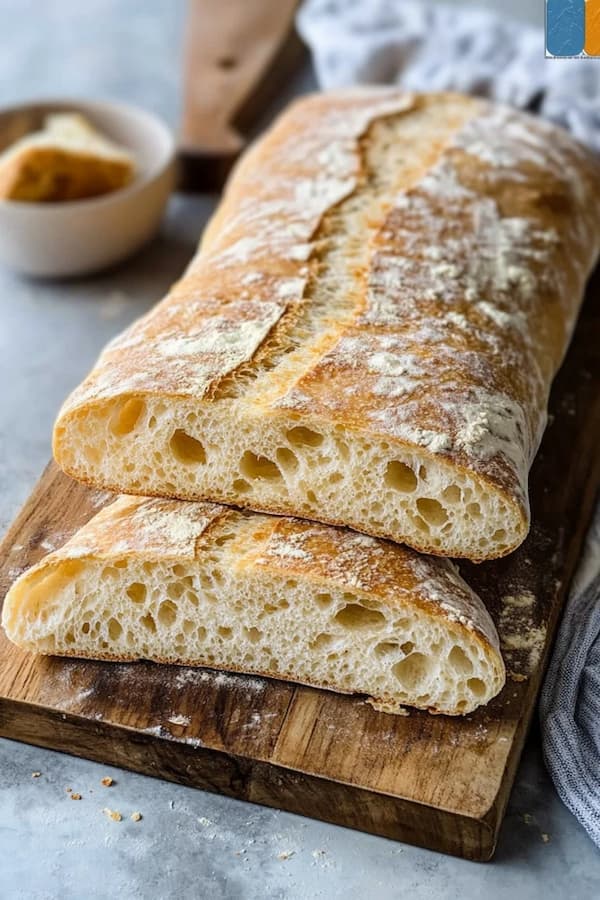
Ciabatta bread is one of the most loved Italian breads, known for its rustic look, airy interior, and chewy crust. The name “ciabatta” means slipper in Italian, a nod to the bread’s long, flat shape. It’s perfect for sandwiches, bruschetta, or simply dipped in olive oil.
The first time I baked ciabatta at home, I was nervous. Its open crumb and chewy crust make it look like something only a bakery could achieve.
But once I tried it, I realized the process is more approachable than it seems. With a wet dough, a little patience, and a few folds instead of heavy kneading, you can bring authentic ciabatta bread to your own kitchen.
Ingredients You’ll Need
- 4 cups bread flour (high protein flour gives the best texture)
- 1 ½ teaspoons salt
- 2 teaspoons sugar
- 1 teaspoon instant yeast
- 1 ½ cups warm water
- 2 tablespoons olive oil
Optional: extra flour for dusting
What Makes Ciabatta Special
Ciabatta bread stands out because of its unique texture. The inside is soft and full of irregular holes, while the crust is crisp and slightly chewy. This texture comes from two key things: a high-hydration dough (meaning more water than a typical bread dough) and minimal handling.
Instead of heavy kneading, ciabatta dough develops its gluten structure slowly, through resting and gentle folding. This creates a bread that’s light, airy, and perfect for soaking up olive oil, soups, or sauces.
Mixing the Dough
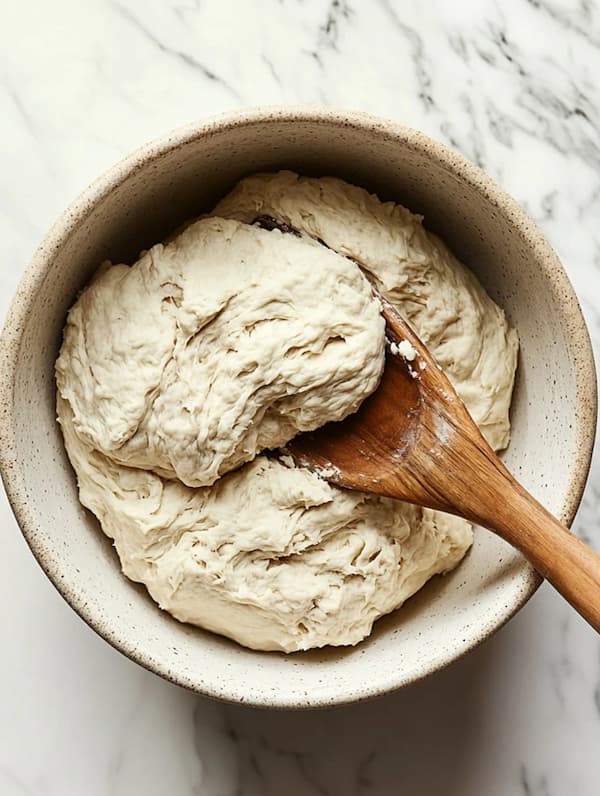
Start by whisking together the flour, salt, sugar, and yeast in a large bowl. Add the warm water and olive oil, then stir with a wooden spoon or spatula until the mixture comes together. The dough will look sticky and shaggy, and that’s exactly right.
Because ciabatta dough is wetter than most, resist the urge to add extra flour. A sticky dough is what creates that airy interior once baked.
First Rise
Cover the bowl with plastic wrap or a clean towel and let the dough rest at room temperature for about 1–2 hours, until doubled in size. The yeast will work slowly, and the dough will become puffy and full of bubbles.
This stage is important because it lays the foundation for the bread’s airy texture.
Folding the Dough
Instead of kneading, you’ll use a folding technique to strengthen the dough. Lightly flour your hands and gently stretch one side of the dough up and fold it over the center. Rotate the bowl and repeat with the other sides until you’ve folded it four times.
Let the dough rest for 30 minutes, then repeat the folding process once more. These folds build structure without deflating the dough too much.
Shaping the Ciabatta
After the folds and rest, turn the dough out onto a well-floured surface. Gently shape it into a rectangle, being careful not to knock out all the air bubbles. Slice it into two equal loaves and place them on a parchment-lined baking sheet.
Dust the tops generously with flour to give the loaves that rustic bakery look. Cover loosely with a towel and let them rise again for about 30–40 minutes.
Baking the Bread
Preheat your oven to 425°F. For the best crust, place a baking dish filled with hot water on the bottom rack of the oven to create steam. Bake the ciabatta loaves for 20–25 minutes, or until the crust is golden brown and the bread sounds hollow when tapped on the bottom.
Let the loaves cool on a wire rack before slicing. The inside should be light, airy, and full of those signature holes.
Serving Ideas
Ciabatta is one of the most versatile breads you can bake. Here are a few ways to enjoy it:
- Slice and toast it for bruschetta, topped with tomatoes and basil.
- Use it for panini sandwiches, pressing it until warm and melty.
- Serve it alongside soups, stews, or pasta dishes.
- Tear it into chunks and dip in olive oil and balsamic vinegar.
- Slice it for garlic bread or crostini.
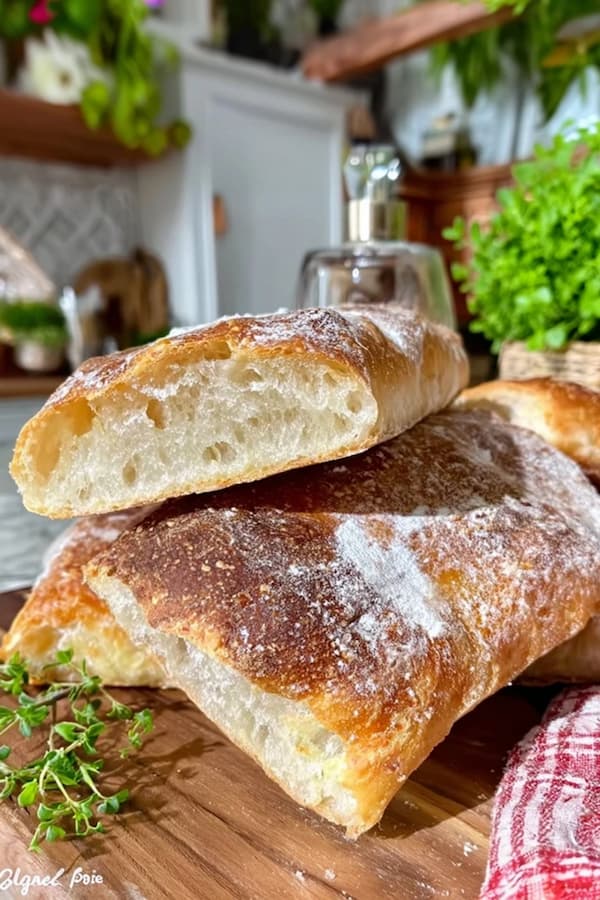
Its chewy crust and airy crumb make it the perfect bread for soaking up flavors.
Tips for the Best Ciabatta
Making ciabatta is simple, but it helps to keep a few things in mind. Don’t add too much flour — sticky dough is key to getting the right texture. Handle the dough gently to preserve air bubbles, especially during shaping. Use bread flour rather than all-purpose for the best chew and open crumb.
Baking with steam gives you that authentic golden crust, so add a pan of water to the oven if you can. Finally, let the bread cool before slicing; it finishes cooking as it rests, and cutting too soon can make the inside gummy.
Why You’ll Love This Recipe
There’s something deeply satisfying about pulling a rustic loaf of ciabatta from the oven. The crackle of the crust, the pillowy interior, and the rich aroma of freshly baked bread make it feel like you’ve brought a piece of Italy into your kitchen.
Ciabatta is the kind of bread that impresses guests but requires only patience, not complicated techniques. Once you make it, you’ll see why it’s a classic in Italian bakeries and why it deserves a spot in your regular baking rotation.
Ingredients
Method
- Start by whisking together the flour, salt, sugar, and yeast in a large bowl. Add the warm water and olive oil, then stir with a wooden spoon or spatula until the mixture comes together. The dough will look sticky and shaggy, and that’s exactly right.
- Cover the bowl with plastic wrap or a clean towel and let the dough rest at room temperature for about 1–2 hours, until doubled in size. The yeast will work slowly, and the dough will become puffy and full of bubbles.
- Instead of kneading, you’ll use a folding technique to strengthen the dough. Lightly flour your hands and gently stretch one side of the dough up and fold it over the center. Rotate the bowl and repeat with the other sides until you’ve folded it four times.
- Let the dough rest for 30 minutes, then repeat the folding process once more.
- After the folds and rest, turn the dough out onto a well-floured surface. Gently shape it into a rectangle, being careful not to knock out all the air bubbles. Slice it into two equal loaves and place them on a parchment-lined baking sheet.
- Dust the tops generously with flour to give the loaves that rustic bakery look. Cover loosely with a towel and let them rise again for about 30–40 minutes.
- Preheat your oven to 425°F. For the best crust, place a baking dish filled with hot water on the bottom rack of the oven to create steam. Bake the ciabatta loaves for 20–25 minutes, or until the crust is golden brown and the bread sounds hollow when tapped on the bottom.