Focaccia is one of the most iconic Italian breads—golden on the outside, soft and airy inside, with just enough olive oil and salt to make every bite irresistible. It’s the kind of bread that feels rustic yet elegant, perfect for tearing and dipping, or serving alongside a big bowl of pasta.
The first time I baked focaccia, I was amazed at how simple it was. It looks fancy with all its dimples and toppings, but the process is straightforward. With a little patience for the dough to rise, you can bring this classic Italian bread into your own kitchen and enjoy it fresh from the oven.
Ingredients You’ll Need
- 4 cups all-purpose flour (or bread flour)
- 2 teaspoons salt
- 1 teaspoon sugar
- 2 ¼ teaspoons active dry yeast (1 packet)
- 1 ½ cups warm water (about 110°F)
- ¼ cup extra virgin olive oil (plus more for drizzling)
- Coarse sea salt, for topping
- Optional toppings: fresh rosemary, cherry tomatoes, olives, caramelized onions
Why Focaccia Is Special
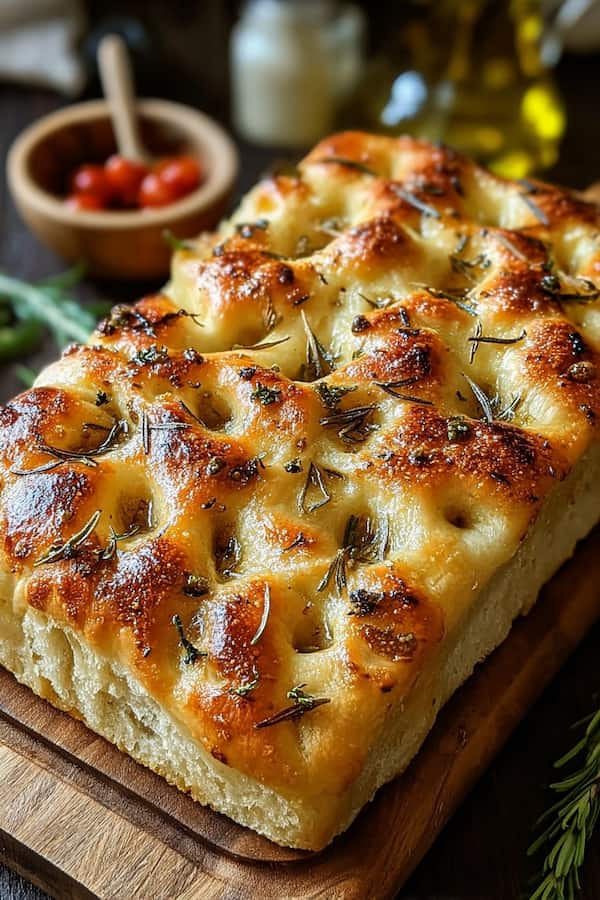
Focaccia isn’t just bread—it’s a canvas for flavor. The high hydration dough gives it a tender, airy crumb, while the olive oil creates a golden crust that crackles when you bite into it.
Italians often eat it plain, just with olive oil and salt, but you can also load it up with herbs, veggies, or cheese. It’s versatile enough to be a side, a snack, or even the base for sandwiches.
Waking Up the Yeast
Start by mixing warm water, sugar, and yeast in a small bowl. Let it sit for about 5–10 minutes until foamy. This step ensures the yeast is alive and ready to do its job. There’s always something satisfying about watching those bubbles appear—it’s like the bread is waking up.
Mixing the Dough
In a large bowl, combine the flour and salt. Add the yeast mixture and olive oil, stirring until a sticky dough forms. This dough will feel wetter than typical bread dough, and that’s exactly what gives focaccia its light texture.
Knead the dough on a lightly floured surface for about 8–10 minutes, or use a stand mixer with a dough hook for 5–6 minutes. You’re looking for a smooth, elastic dough that still feels a little tacky.
The First Rise
Place the dough in a lightly oiled bowl, turning it once to coat. Cover with a clean towel or plastic wrap and let it rise in a warm spot for 1–2 hours, or until doubled in size. During this time, the yeast works its magic, creating air bubbles that will give the bread its signature texture.
Shaping and Dimpling
After the dough has risen, punch it down gently to release the air. Transfer it to a well-oiled baking sheet or a 9×13-inch pan. Use your fingers to press it out evenly, about ½ to ¾ inch thick. Don’t worry about making it perfectly smooth—the dimples are part of its charm.
Now comes the fun part: drizzle the top generously with olive oil and press your fingertips into the dough to create little wells. These dimples hold the oil and toppings, giving the bread its signature look and flavor.
The Second Rise
Cover the pan loosely and let the dough rest for another 20–30 minutes. This short second rise helps the bread puff up in the oven and ensures a soft, airy crumb. While it rests, preheat your oven to 425°F.
Topping Ideas
Classic focaccia is topped simply with olive oil and sea salt, but you can get creative:
- Rosemary Focaccia – Sprinkle fresh rosemary leaves into the dimples.
- Tomato Focaccia – Press halved cherry tomatoes into the dough.
- Olive Focaccia – Scatter pitted olives for a briny bite.
- Caramelized Onion Focaccia – Spread onions for sweetness.
Each topping adds a new dimension, but the base recipe is so good you can’t go wrong.
Baking to Golden Perfection
Bake the focaccia for 20–25 minutes, until golden brown on top and crisp at the edges. The smell of fresh bread and olive oil filling the kitchen is pure heaven. Once baked, let it cool slightly before slicing or tearing. Focaccia tastes best warm, but it’s also delicious at room temperature.
Serving the Focaccia
Focaccia is one of the most versatile breads you’ll ever make. Serve it as an appetizer with olive oil and balsamic vinegar for dipping, pair it with soups or salads, or use it to mop up pasta sauce. You can even slice it horizontally to make incredible sandwiches.
It’s also a fantastic bread to bring to potlucks or family dinners. It looks impressive, feeds a crowd, and everyone loves it.
Tips for the Best Focaccia
Over time, I’ve learned a few tricks for making this bread shine:
- Don’t skimp on olive oil—it gives flavor and keeps the bread moist.
- Use coarse sea salt for that authentic finish.
- Let the dough rise fully for the best texture.
- Add toppings just before baking so they don’t sink too deep.
- If you want a crispier bottom, bake the focaccia on a preheated baking stone or cast-iron skillet.
Why You’ll Love This Recipe
This focaccia recipe is classic, simple, and endlessly rewarding. It doesn’t take a lot of effort, but the result feels special. The golden crust, the fluffy interior, and the drizzle of olive oil make it irresistible.
It’s the kind of bread that makes you want to tear off pieces with your hands and share them around the table. Once you try it, you’ll see why focaccia has been a staple in Italian kitchens for centuries—and why it deserves a regular spot in yours.